
CASE STUDY
Saalt Product Efficacy Study
Saalt Real-World Cohort Study Results for Product Efficacy
An open-label, encouragement design study evaluated the product efficacy of menstrual cups in menstrual cycling women aged 18 years and older in the United States. The study was conducted by People Science using the Chloe platform.
Study Overview
Primary Finding
Commercial Impact
Study Snapshot
Primary Outcome
Study Type & Design (N=)
Duration & Dosage
Participants Criteria (incl/excl)
Analytical Method
Conducted By / Sponsor
Key Results
Primary
Secondary
NPS
Recruitment Speed
Retention
Publication
Details
Study Snapshot
The Problem
A wave of 2023 to 2024 research found detectable heavy metals and chemical contaminants in tampons across both organic and conventional brands, traced back to problems in the cotton supply (metal uptake from soil, pesticides, chemical bleaching). This triggered FDA attention and the need for healthier options.
Switching from tampons to Saalt cups/discs produced statistically significant reductions in core menstrual symptoms (cramping, fatigue, bloating, leaks; p < 0.05), with 78% reporting overall symptom improvement.
76% of participants expressed continued use of cups and discs. 95% of participants would recommend Saalt to a friend.
Details
Change in menstrual symptom burden when switching from tampons to Saalt cups/discs, specifically the frequency of symptoms like cramping, fatigue, and bloating (measured via daily symptom logs), plus overall improvement captured by the Participant Global Impression of Change.
Decentralized, observational, open-label, encouragement-design triall (N=246).
3 Menstrual Cycles (~3 months)
Inclusion: menstrual cycling women aged 18 years and older in the United States, and to experience menstrual cramps not driven by known endometriosis.
Non-parametric statistics were used to evaluate differences between conditions as data were nonnormally distributed. Mixed-Effects Models were used to evaluate the impact of demographic factors on response to the interventions.
People Science via Chloe Clinical Research Platform / Sponsored by Saalt.
Details
People Science via Chloe Clinical Research Platform / Sponsored by Saalt.
Among the final cycle of all completers (n=188), Participant Global Impression of Change indicated that 27.7% of participants felt very much improved, 31.9% felt much improved, and 18.6% felt minimally improved, for a total of 78.2% improvement... 19.7% felt no change, and 2.1% felt worse using Saalt as compared to tampons. Leaks and daily changes trended lower during Saalt product use.
95% would recommend Saalt to a friend. 76% said they'd continue using cups and discs.
Decentralized recruitment via landing page, eligibility survey, app download, product order
246 women participated in product use, with 188 completing 3 cycles of data collection." That's 188 of 246, roughly 76% completing all three cycles (about 24% attrition over the study).
Full CSR published Mar 2026 (SAALT Consumer Health Report PDF); no peer-reviewed journal/DOI yet.
Download SAALT Consumer Health Report
Scientific Breakdown
Key Results
This study is the first step in validation of the benefits and efficacy of Saalt's menstrual cups or discs as compared to tampons through finished product testing.
In an open-label, encouragement-design trial, 246 habitual tampon users each completed one baseline cycle with their usual tampons, then were encouraged to use Saalt cups or discs for the following two menstrual cycles, logging symptoms and product experience in the Chloe mobile app across all three cycles.
Category
Introduction & Mechanism of Action
Recruitment & Participant Panel
Execution & Data Collection
Study Outcome
References / Citations + download/link
Menstrual cycling women aged 18 years and older in the United States, and to experience menstrual cramps not driven by known endometriosis.
Interested participants were offered a link to a landing page describing the study and a survey to determine eligibility. If eligible, participants were automatically prompted to download the Chloe mobile application, enroll, and order Saalt products.
Cox Menstrual Symptom Questionnaire (MSQ), completed at the end of each cycle's menses. Cox MSQ scores corresponded to moderate symptom burden (mean 72).
Participant Global Impression of Change (PGIC), a validated single-item change measure, used for the 78% improvement figure.
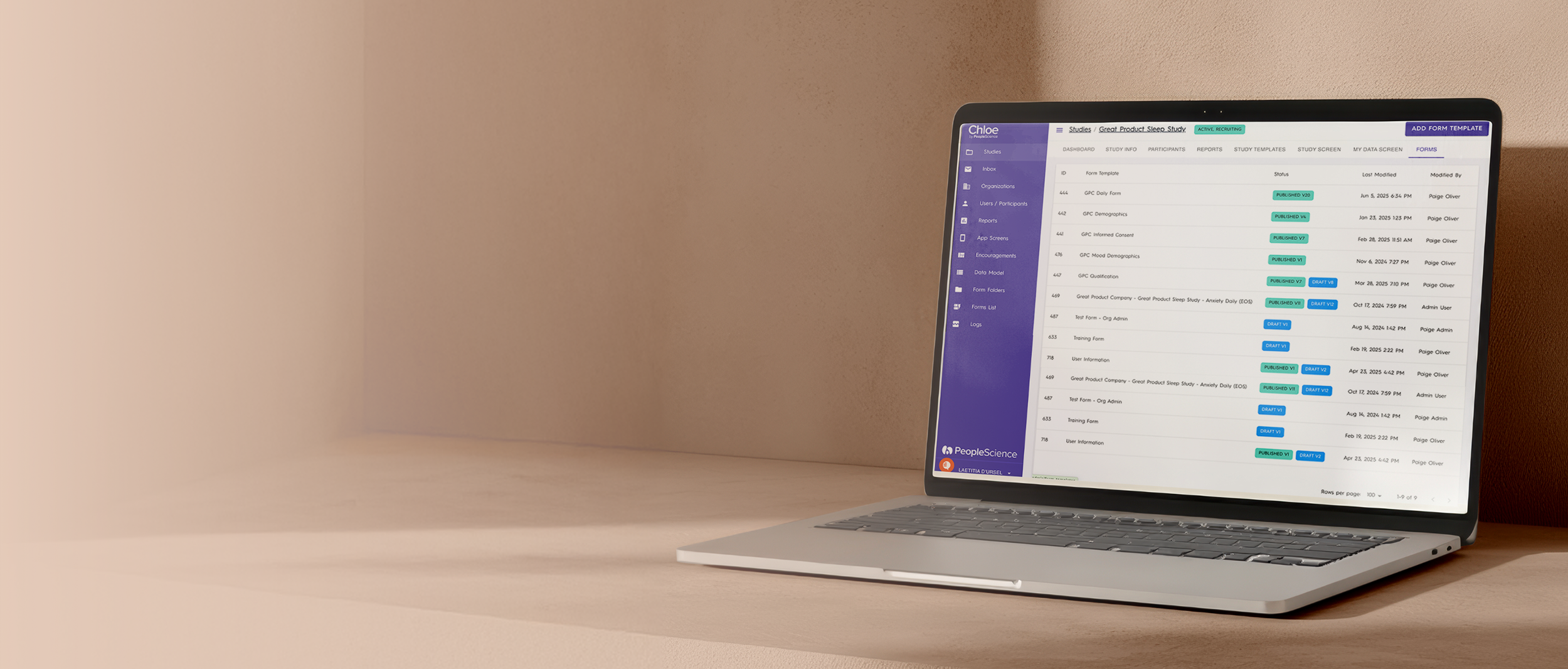
Chloe mobile application (built on HIPAA-compliant AWS servers) delivered surveys, consent, daily questionnaires, calendar reminders, and progress tracking. All electronic consent and data management ran through Chloe.
Interested participants were offered a link to a landing page describing the study and a survey to determine eligibility. If eligible, participants were automatically prompted to download the Chloe mobile application, enroll, and order Saalt products.
Primary: Participant Global Impression of Change indicated that 27.7% of participants felt very much improved, 31.9% felt much improved, and 18.6% felt minimally improved, for a total of 78.2% improvement (rounded for ease to 78%). 19.7% felt no change, and 2.1% felt worse using Saalt as compared to tampons.
Secondary: Among participants who self-rated improvement on the PGIC (n=151), brain fog also improved (p<0.03) (data not shown). Food cravings were reduced (p=0.002). Participants used an average of 3 tampons per day (range 1-6). Participants save an average of 1 'change' per day with cup/disc use.
Safety & Tolerability: Adverse Events potentially attributable to product use were rare, consisting of n=1 uncomfortable bladder pressure from cup use, n=1 case of worse cramping, n=2 cases of yeast infection/itchiness, and n=1 case of a participant needing assistance to remove the cup.
Study Limitations: Known endometriosis, since participants had to experience menstrual cramps not driven by known endometriosis
Marroquin et al., 2024 – "Chemicals in menstrual products: A systematic review," BJOG. obgyn.onlinelibrary.wiley.com/doi/10.1111/1471-0528.17668 (note: PubMed lists it as 2023; the report cites 2024)
Shearston et al., 2024 – "Tampons as a source of exposure to metal(loid)s," Environment International. First study to measure metals in tampons (UC Berkeley/Columbia). publichealth.columbia.edu/news/first-study-measure-toxic-metals-tampons-shows-arsenic-lead-among-other-contaminants
Ghanshamnani et al., 2021 – "Prevalence of common urogenital infections among menstrual cup users," Indian Journal of Obstetrics and Gynecology Research 8(2):199–205. ijogr.org/archive/volume/8/issue/2/article/13322
Arenas-Gallo et al., 2020 – "Acceptability and safety of the menstrual cup: a systematic review of the literature," Revista Colombiana de Obstetricia y Ginecología 71(2):163–176. pmc.ncbi.nlm.nih.gov/articles/PMC6669309
Expert Interpretation
“People Science allowed us to conduct a rigorous, gold-standard trial directly in participants' homes. The data we gathered not only confirmed our mechanism of action but showed that our formulation can deliver the benefits of fasting to the population that needs it most.”
Dr. Chris Rhodes, PhD
CEO of Mimio Health
What People Are Saying
-
“It reduced pain and helped me get my life back.”
— Participant
-
“My cramping was almost non-existent this month.”
— Participant
-
"I love knowing they'll last 10 years without needing to buy pads or tampons.”
— Participant
Frequently Asked Questions
-
This consumer health study provides preliminary evidence supporting the positive impact of Saalt menstrual cups and discs on a variety of subjective symptoms, including cramping, fatigue and inflammatory symptoms, and leakage.
-
No, the observational, open-label nature of this study has several limitations. Participants were not blinded to the nature of the intervention nor the days on which they consumed it.
-
Three months in total: participants used typical tampon products for one cycle, followed by encouragement to use Saalt menstrual cups or discs for two cycles.
-
Adverse Events potentially attributable to product use were rare, consisting of n=1 uncomfortable bladder pressure from cup use, n=1 case of worse cramping, n=2 cases of yeast infection/itchiness, and n=1 case of a participant needing assistance to remove the cup.
-
Several menstrual symptoms were reduced with Saalt use as compared to the tampon baseline sample. These include menstrual cramps (p=0.0004), bloating (p=0.02), headache (p=0.002) and fatigue (p=0.004). Unexpectedly, food cravings were reduced (p=0.002).
-
246 women participated in product use, with 188 completing 3 cycles of data collection. Participants were required to be menstrual cycling women aged 18 years and above in the United States, and to experience menstrual cramps not driven by known endometriosis.
Other Case Studies


Book a Demo
Turn your customers’ everyday health data into your most powerful competitive asset. Explore our Chloe platform today.